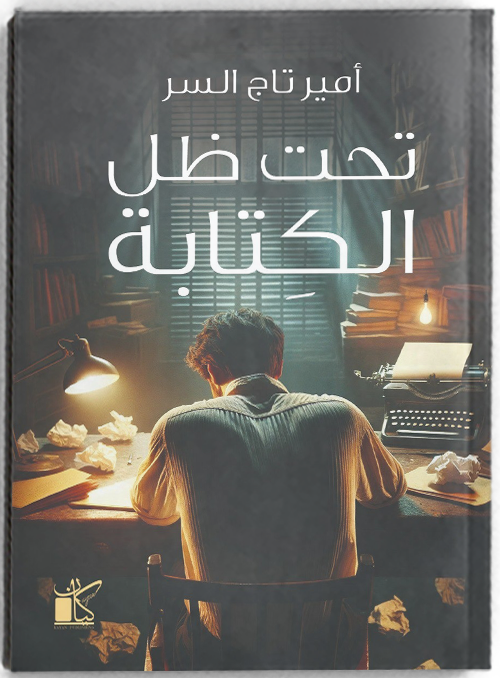
The book is a collection of various articles by the author, originally published in several newspapers and websites. In these articles, the author explores the phenomenon of creativity from different perspectives, writing about creativity itself and creators. He reviews books that have influenced his personal journey and others that have not contributed to his growth. The author also addresses the dynamics of writing, the rapid spread of certain books, and the reasons for their popularity from his point of view.
The book contains about 40 articles, including articles about “magician of writing,” Borges, as recounted by the Argentine writer Alberto Manguel, who once read to Borges after he became blind. Borges, though a one of the biggest names in literature, remained humble and was open to the opinions of beginners in his writing—unlike many Arab writers who, after gaining a small degree of fame, become arrogant with their readers.
In his book, Taj Al-Sir discusses the reader as the primary target that writing aims to satisfy. He reflects on how some readers may not fully understand certain works and then generalize their misunderstanding to others. He also critiques online reading platforms, which he resemble to a “gallows for books,” where reviews are often written by people who may not have even read the books they criticize—what the author calls “the foolishness of the internet.” Many people mistakenly believe that writing is a direct reflection of reality, unaware of the vital role that imagination plays in creating a text.
The author also touches on characters that are entirely fictional yet have become associated with real people in specific places, giving them an undeserved real-life identity. One example is the character “Saif Al-Din” from Tayeb Salih’s novel Wedding of Zein, a fictional character that people came to believe was based on someone real from the village where the story is set. The book also features articles on literary figures who have passed away, such as Gamal El-Ghitani, whose recent death led to the naming of a street in his honour in the Al-Gamaleya neighbourhood—an honour the author wishes could be extended to all creative individuals.
The author also discusses topics that are dear to many writers from the Third World, such as marginalization and poverty. He mentioned that despite living in a developed country, Canadian author Alice Munro frequently wrote about themes of marginalization and the struggles of the poor. Other topics covered include the refugee crisis, illegal immigration, and shattered dreams—such as the tragic drowning of the Syrian child Alan. The author examines these humanitarian issues and their connection to culture and creativity in his collection titled Under the Shade of Writing, which contains forty articles in total.